

Are We Slaves To Our Unconscious?

Your brain is overwhelmed by new information every second and it can’t process all of it efficiently. So, our unconscious mind uses shortcuts to filter out the stuff that doesn’t seem that important.
By studying these mental shortcuts we can better understand and implement changes into our lives that will actually change our behavior. One pattern of thinking explored in behavioral finance is the concept called mental accounting.
The following story by Belsky and Gilovich should illustrate the way in which we can use mental accounting to rationalize our actions:
“By the third day of their honeymoon in Las Vegas, the newlyweds had lost their $1,000 gambling allowance. That night in bed, the groom noticed a glowing object on the dresser. Upon closer inspection, he realized it was a $5 chip they had saved as a souvenir.
Strangely, the number 17 was flashing on the chip’s face. Taking this as an omen, he donned his green bathrobe and rushed down to the roulette tables, where he placed the $5 chip on the square marked 17. Sure enough, the ball hit 17 and a 35-to-1 bet paid $175.
He let his winnings ride, and once again the little ball landed on 17, paying $6,125. And so it went, until the lucky groom was about to wager $7.5 million. Unfortunately the floor manager intervened, claiming that the casino didn’t have the money to pay should 17 hit again.
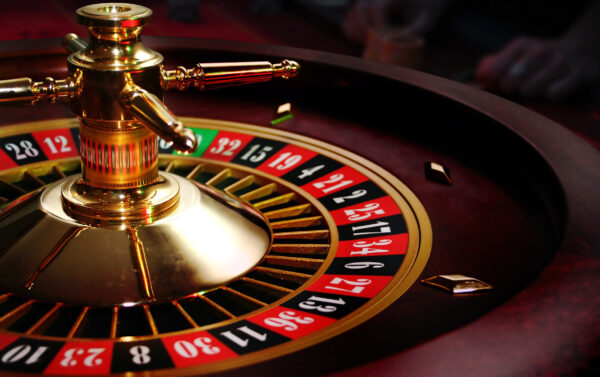
Put it all on 17.
Undaunted, the groom taxied to a better-financed casino downtown. Once again he bet it all on 17— and once again it hit, paying more than $262 million. Ecstatic, he let his millions ride—only to lose it all when the ball fell on 18. Broke and dejected, the groom walked the several miles back to his hotel.
‘Where were you?’ Asked his bride as he entered their room.
‘Playing roulette.’
‘How did you do?’
‘Not bad. I lost five dollars.’”
In the story the man uses mental accounting to separate his initial bet of $5 from his earnings of $262 million. He probably considers the $262 million he earned as house money, which allows him to continue betting because even if he loses all of his money, he’s only out $5. The idea of house money allows both investors and gamblers to avoid feeling regret if they only lose money from their earnings because it isn’t money that they earned with their time, it’s new money that doesn’t have as much value associated with it.
Now, we’re all guilty of doing this. Some people have a balance on their credit card each month that’s charging them an obscene interest rate, while at the same time they have enough money in a low interest savings account to pay off their debt. Some people treat a bonus from work like it’s free money, which they can spend on something they’ve wanted, instead of treating it like it’s part of their salary. Others have their fun money that they can burn on anything they want, while at the same time they have difficulty paying their bills.
It’s important to observe this type of behavior in our own lives and try to understand what we’re gaining from it.
So, can you think of ways that you use mental accounting in your own life?
Did the man in the story lose $5 or $262 million?
[widgets_on_pages id=”Wall Street Skinned”]